
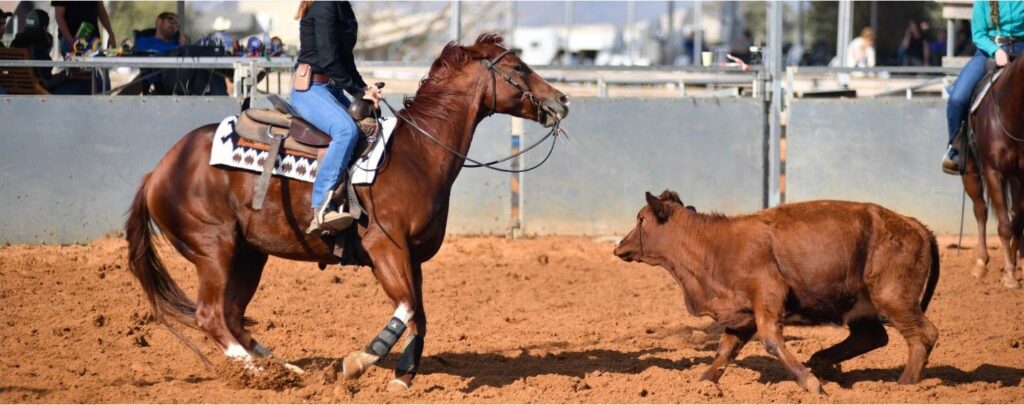
When Marvin Froze in the Box: A Team Roping Story About Stiffness, Sensitivity, and Looking at the Full Pattern
Some horse problems are hard because they are dramatic. Others are hard because they are confusing. A horse that once worked well, tried hard, and felt athletic can slowly become stiff, resistant, and unreliable in ways that leave owners searching everywhere for answers.
That was the story Dan shared with us about his 12-year-old team roping header, Marvin.
Marvin had once worked great. Dan described him as extremely fast-footed and powerful. But about four years ago, Marvin had a bad wreck. He overreached a front foot, face-planted, and the accident was serious enough that it knocked Dan out. Since then, things had changed.
Over the last two years, Marvin had become increasingly difficult in the box. Dan said he would either freeze up and refuse to go at all, or get so stiff that he would not give his face. He would not put his hind end in the corner correctly, would not rate a cow the way he should, and was wringing his tail badly. Dan also noted that Marvin had started cribbing.
What made the situation especially frustrating was that the pattern did not look simple. Without a heeler, Marvin would stand fine. He branded calves and worked well in that setting. The veterinarian had not found anything definitive, and chiropractic work suggested he was especially stiff through the neck. Dan had even tried ace, and it did not help.
When a horse presents this way, it is easy to feel stuck between training, pain, habit, and nerves. For Performance Equine Nutrition, that is exactly why it helps to step back and look at the full pattern. Patterns involving stiffness, freezing, resistance, sensitivity, tail wringing, and inconsistent performance may sometimes be consistent with magnesium shortfall, especially when stress tolerance, muscle relaxation, and nervous system regulation seem to be part of the picture. That does not mean magnesium shortfall is definite, and it does not mean every horse with these symptoms has the same root cause. But it can be worth considering as part of the bigger picture.
Marvin’s management details added more context. He is an 1100-pound horse, gets alfalfa, does not receive gut support, and in the winter he is ridden every day. Dan also shared that Marvin had been a stud until two years ago. He is mildly sensitive to brushing, though he is good for the farrier behind. He was turned out for the summer, but that did not improve the issue.
That kind of history matters. Workload, diet, stress, established habits, body tension, and previous experiences can all influence how a horse feels and performs. In some cases, a horse may also become stuck in a pattern where the original issue and the learned behavior begin reinforcing each other.
Based on what Dan described, we recommended starting Marvin at 3 scoops AM and 3 scoops PM for the first week, then potentially adjusting to 2 scoops AM and 2 scoops PM depending on how he responded. We also talked about the fact that if he continued to act up in the box while being backed into the corner, some of that may reflect an established habit that would still need thoughtful retraining and habituation, even if his body started feeling better.
That distinction is important. At Performance Equine Nutrition, we do not view these horses through a one-cause lens. A horse can have physical tension, nervous system overload, stress sensitivity, and a learned behavioral pattern all at once. Nutritional support may be worth considering when the pattern fits, but it is not a substitute for good horsemanship, appropriate veterinary care, or addressing training history.
It is also worth saying clearly that horses showing sudden behavior changes, significant pain, or persistent performance issues should be evaluated carefully. Veterinary care remains important, especially in cases involving a history of injury, unexplained stiffness, or major changes in willingness to work. Supplements are meant to support the horse, not replace diagnosis or treatment.
For horse owners, the point is this: when a horse becomes stiff, resistant, inconsistent, or mentally stuck in a performance situation, do not look at only one symptom. Look at the whole pattern. Workload, diet, recovery, sensitivity, nervous system regulation, and established habits may all be part of what you are seeing. Sometimes the best next step is not guessing harder, but stepping back and evaluating the full picture more carefully.
If your horse is showing signs that may be consistent with magnesium shortfall, a good place to start is our Magnesium Deficiency Questionnaire. If you would like help sorting through your horse’s specific symptoms, management, and workload, you can also schedule a consultation.