
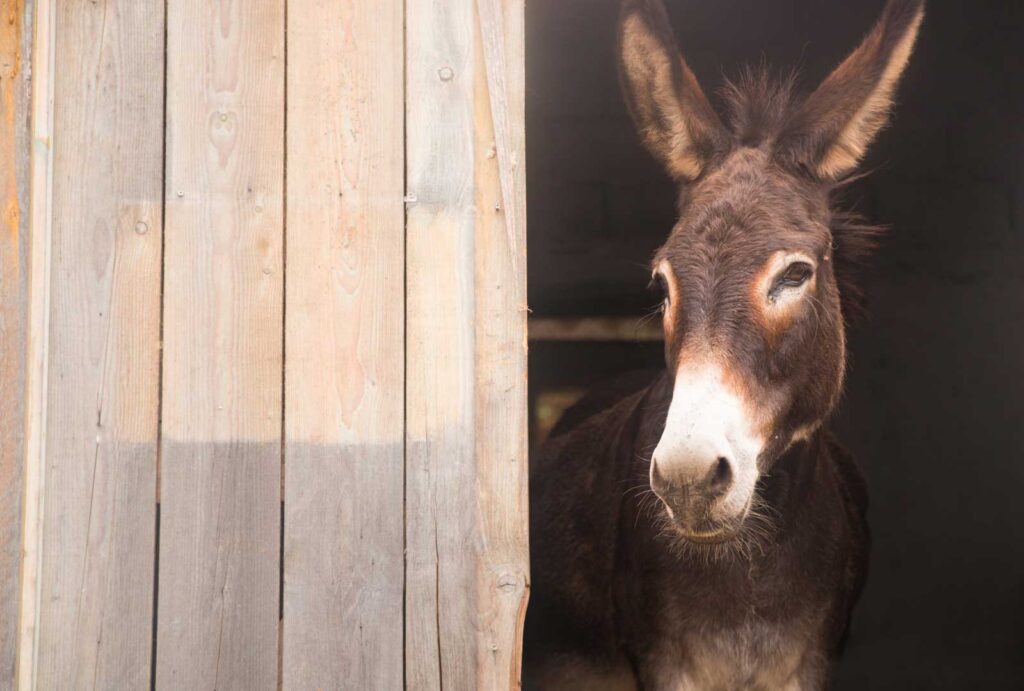
A Mule Who Could Be Steady One Day and Spooky the Next
Some horses, including mules, can make their people feel like they are riding two completely different animals.
One day they are steady.
The next day they are anxious, spooky, reactive, or crow-hoppy.
That was the pattern “Lindsay” was seeing with her mule, Molly.
The owner’s name has been changed to protect client confidentiality. The mule’s name has not been changed.
Lindsay had owned Molly for about a year. Molly was a 14.3-hand, roughly 900-pound mule who worked hard. She was not simply lightly ridden once in a while. She was covering high miles on the trails, including 10-mile rides in high country, and she was being ridden every day.
That workload matters.
Because the more miles a horse or mule puts on, the more support the body needs for muscle function, recovery, and stress tolerance.
The Colic and Heat Cycle Question
Molly’s story was complicated by another concern: she had repeated colic episodes.
Lindsay believed the colic might be related to Molly’s heat cycle. There was also a cyst on one ovary, and her veterinarian was involved. In fact, the call had to be cut short because the vet arrived.
That is an important part of this story.
Frequent colic, ovarian cysts, and reproductive pain are veterinary issues. They deserve a full veterinary workup and careful discussion with the vet. Lindsay’s veterinarian was considering removing Molly’s ovaries, which shows how seriously the reproductive piece was being evaluated.
But before taking that step, we also wanted to look at the whole mule.
Because while hormones and ovarian pain may have been part of the story, Molly was also showing a broader pattern that could be worth evaluating as part of the magnesium question.
The Behavior Pattern: Consistently Inconsistent
Behavior-wise, Molly was described as “consistently inconsistent.”
That phrase tells us a lot.
Her behavior fluctuated often throughout the month and during training. Sometimes she was anxious and spooky. Sometimes she was steady. Sometimes she could be crow-hoppy. She also had a history of bolting.
Bolting is not a small behavior. It can be dangerous, and it is always worth taking seriously. When a horse or mule has a history of bolting, the safest approach is to look at training, pain, tack, veterinary issues, nutrition, and management together rather than assuming it is simply attitude.
Molly was also hard to touch. She did not love being handled and did not like to be scratched hard. Lindsay had learned that she had to be very gentle with her.
She was mildly brush sensitive, though she was fine for saddling and was not cinchy.
Not every animal dealing with magnesium shortfall looks explosive every day. Some show it in small ways: skin sensitivity, touchiness, variable anxiety, inconsistent rides, or a smaller-than-normal tolerance for work and stress.
Molly’s signs were not enough to say, “This is definitely magnesium.”
But they were enough to ask, “Could magnesium shortfall be contributing to the larger pattern?”
When Touch Sensitivity Becomes Part of the Story
One of the details that stood out was how careful Lindsay had to be with Molly’s body.
Molly did not like to be touched roughly. She did not like hard scratching. She needed gentle handling. That kind of skin or body sensitivity can sometimes be dismissed as personality, especially in mares and mules.
But body sensitivity is information.
It may point to soreness, nervous system sensitivity, hormonal discomfort, gut pain, muscle tension, or a combination of factors. When that sensitivity appears alongside colic episodes, heat-cycle concerns, anxiety, spookiness, bolting history, crow-hopping, and heavy trail mileage, it becomes part of a larger pattern.
That is exactly why we look at the whole animal rather than one symptom at a time.
The Trail Miles Matter
Molly was ridden every day and doing real trail work. Ten miles in high country is not nothing. Climbing, descending, carrying a rider, navigating terrain, and staying mentally aware on the trail all require muscle endurance and nervous system regulation.
For a mule doing that kind of work regularly, magnesium demand can increase.
Magnesium plays a key role in muscle relaxation, recovery, and stress tolerance. When the body is under regular physical demand, magnesium needs can be higher. If the animal is not getting enough usable magnesium to match the workload, the signs may show up as tightness, touch sensitivity, anxiety, spookiness, inconsistent behavior, or difficulty staying settled.
That was the piece that stood out in Molly’s story.
She was not idle. She was working hard.
And her body may have needed more support than her current program was providing.
“But She’s Already Getting Magnesium”
Molly had recently been put on Equilix with 750 ppm of magnesium.
That is a detail we hear often: “My horse is already getting magnesium.”
But the presence of magnesium on a label does not always tell us whether the horse or mule is getting the right form, the right amount, or enough support to recover from an existing shortfall. Workload, diet, stress, symptoms, and response all matter.
Molly was eating Timothy hay and working daily. She was covering significant trail miles and still showing signs of inconsistency, anxiety, spookiness, touch sensitivity, bolting history, and occasional crow-hopping.
That made MagRestore worth considering before making a more permanent reproductive decision.
Why MagRestore First Made Sense
With Molly, the suggestion was simple:
Try MagRestore first.
Not because it would replace veterinary care.
Not because it would prove the ovarian cyst was irrelevant.
Not because we could guarantee the colic episodes were tied to magnesium.
But because Molly was doing high-mileage work every day and showing a pattern that may be consistent with magnesium shortfall. Supporting her magnesium status was a reasonable, low-risk step to try before moving forward with a major surgical decision.
As we said during the conversation, she had nothing to lose by giving her body more support and watching the response carefully.
What We Would Watch For
With Molly, the most important thing would be to track the whole pattern over time.
We would want to watch whether she became more consistent from ride to ride. Did the anxious and spooky days become less frequent? Did she feel steadier on the trail? Did the crow-hopping reduce? Did her bolting tendency soften or become less likely as her body and nervous system received more support?
We would also watch whether she became more tolerant of touch. Could Lindsay scratch her a little more normally? Did grooming feel easier? Did Molly seem less defensive about her skin and body?
And we would want Lindsay to keep working closely with her veterinarian on the colic and ovarian concerns. If colic episodes continued, worsened, or appeared severe, that would remain a veterinary priority.
Nutrition can support the horse or mule.
It does not replace diagnostics.
The Bigger Lesson From Molly
Molly’s story is a reminder that performance is not limited to the show pen.
A mule doing high-country trail miles every day is an athlete. Her muscles, nervous system, and recovery systems are working hard. If she becomes inconsistent, spooky, touchy, reactive, or prone to bolting, it is worth asking whether her body is getting the support it needs for the job.
It is also a reminder that complex cases can have more than one layer.
Molly may have a reproductive piece. She may have a gut/colic piece. She may have a workload and recovery piece. She may have a nervous system piece. And magnesium support may be one helpful part of that larger picture.
The goal is not to oversimplify her story.
The goal is to listen carefully enough to help her.
Is Your Trail Horse or Mule “Consistently Inconsistent”?
If your horse or mule is doing hard miles and showing signs like anxiety, spookiness, bolting, crow-hopping, touch sensitivity, tightness, poor recovery, or inconsistent behavior, magnesium support may be worth considering as part of the whole picture.
Frequent colic, reproductive concerns, ovarian cysts, severe pain, bolting, or sudden behavior changes should always involve veterinary guidance.
Take the Magnesium Deficiency Questionnaire or schedule a consultation with Performance Equine Nutrition.