
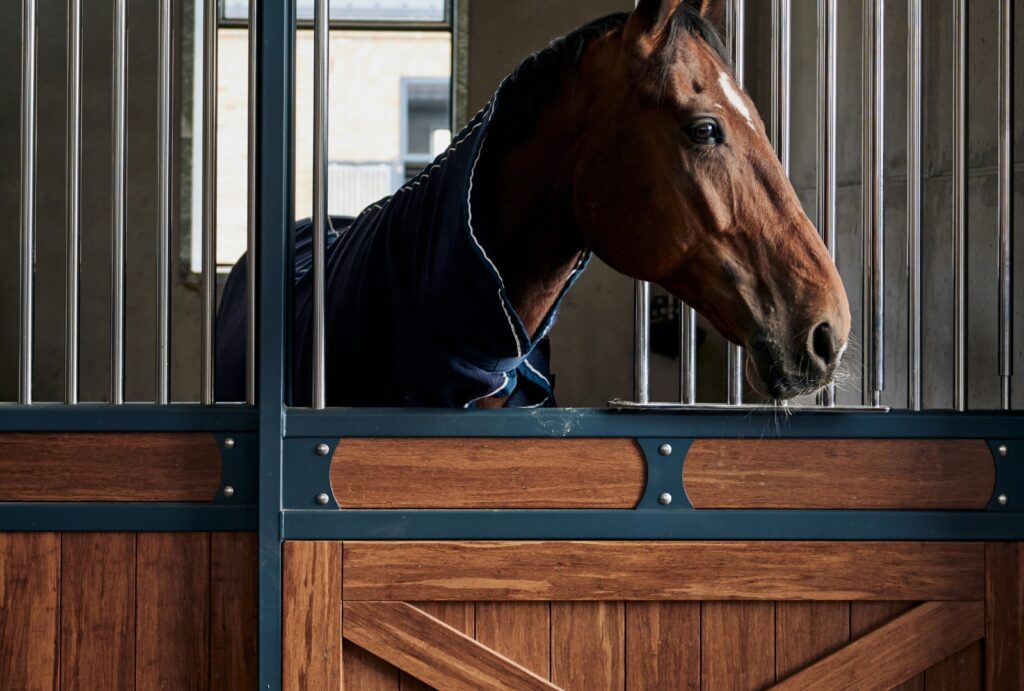
We recently heard from a dedicated owner, let’s call her Hannah, who has done a beautiful job bringing her 16.1hh gelding back into work. He is currently fully rehabbed, in good shape at 1,100 lbs, and eating a diet of alfalfa and Bermuda hay. He is working five days a week, and Hannah is being careful to avoid repetitive drilling.
Despite this thoughtful approach, Hannah reached out with a concerning pattern. She notes that during work, he gets “super tight and then bucks.” Outside of work, she describes a lingering state of “hyper vigilance.”
When a horse has successfully completed rehab but exhibits these types of physical and emotional roadblocks, it can be incredibly frustrating. Let’s look at this symptom pattern through a nutritional and physiological lens to understand how we can best support a horse struggling to relax.
Step One: The Veterinary Perspective
Whenever a horse exhibits sudden changes in behavior, extreme tightness, or bucking, our first step is always to consult with a veterinarian. Pain is the number one cause of explosive behavior. Before looking at nutrition, it is crucial to rule out underlying clinical issues such as gastric ulcers, kissing spine, saddle fit issues, dental pain, or lingering physical soreness from his previous injury. Once you and your vet have confirmed the horse is physically cleared and comfortable, we can look at how whole-horse nutritional support fits into the bigger picture.
The Physiology of Tension and Hyper-Vigilance
If pain has been ruled out, this pattern of sudden muscle tightness and chronic hyper-vigilance may be consistent with a magnesium shortfall. Performance Equine Nutrition focuses on improving the mental and physical performance of horses through magnesium-based nutrition.
Magnesium plays a key role in muscle relaxation, nervous system regulation, and stress tolerance. On a cellular level, magnesium helps regulate the fight-or-flight response by balancing calcium in muscle cells. Calcium is responsible for muscle contraction and nerve firing, while magnesium is responsible for the subsequent relaxation.
Because this horse is receiving alfalfa (which is naturally very high in calcium), the delicate balance between calcium and magnesium may be skewed. Without adequate magnesium, muscles and nerves remain partially stimulated, which can cause chronic tension, spooking, and fatigue[cite: 1]. This nutritional imbalance can cause horses to appear unreliable, reactive, or “burned out,” even though the root cause is nutritional rather than behavioral[cite: 1].
Supporting the Nervous System and Muscles
To help a horse step out of a hyper-vigilant state and find both muscle relaxation and nervous system regulation, targeted nutritional support is certainly worth considering. In Hannah’s case, we suggested starting with a topical application to provide immediate support to tight, overworked muscles.
- Topical Relief: Magnesium Oil is a ready-to-use topical magnesium solution used for spot treatments, muscle soreness, and recovery[cite: 1]. Alternatively, MagBath is a transdermal magnesium bath product that absorbs through the skin to aid in post-exercise recovery, reduce muscle soreness, and help dissipate lactic acid.
- Internal Restoration: For long-term whole-horse support, an oral supplement like MagRestore (which uses di-magnesium malate, a highly bioavailable magnesium form) is designed to restore magnesium levels in deficient horses and support calmness and muscle recovery
By addressing the horse’s physiological needs, we can often help them find a state of physical and mental balance, allowing them to perform comfortably and confidently
Is Your Horse Showing Signs of Tension?
If your horse is struggling with inconsistent behavior, muscle tightness, or hyper-vigilance, we are here to help you get to the bottom of it.