
When Kissing Spine Is Only Part of the Story: The Sensitive APHA Mare With a Sore Back and a Short Fuse
A Young Mare With a Big Diagnosis
Some diagnoses are real, important, and still not the whole story.
That was the conversation when “Autumn” reached out about her 5-year-old APHA mare.
The owner’s name has been changed to protect client confidentiality. No horse name was provided.
This mare had been diagnosed with kissing spine. Every joint had been injected. She was getting chiropractic work every eight weeks. She was on Regumate, methocarbamol for her muscles, GutX, and a vitamin/mineral supplement.
In other words, this was not a horse being ignored.
This was a young show mare with a caring owner, a lot of professional support, and a long list of things already being done to help her feel better.
But she was still showing signs that made us want to look deeper.
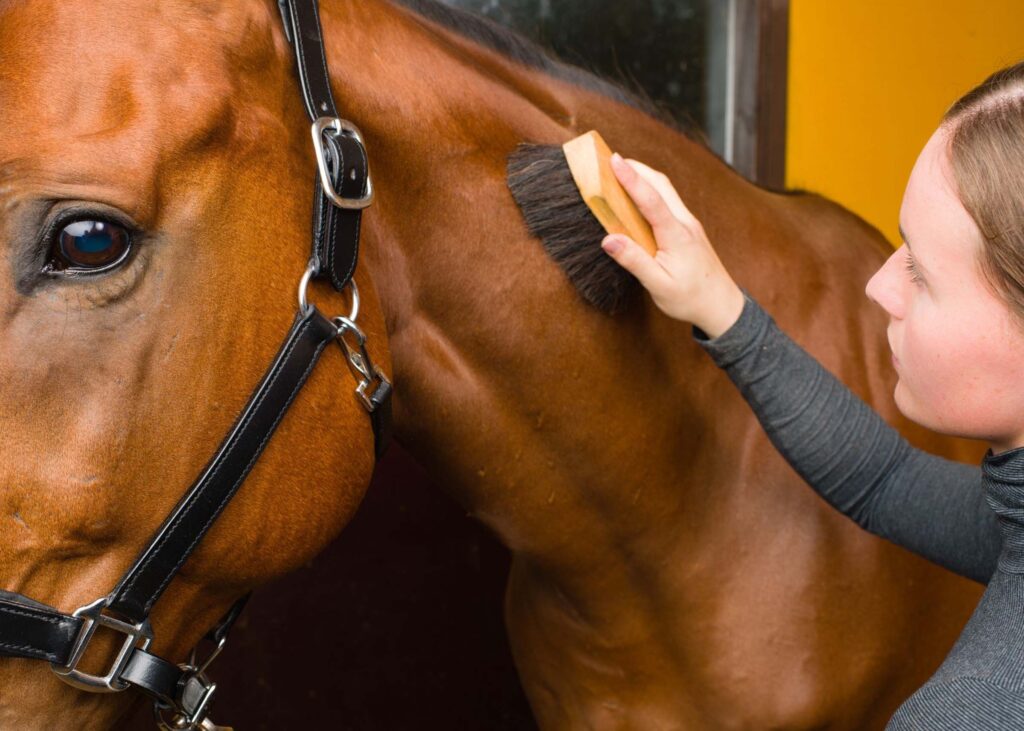
The Brush Sensitivity Clue
This mare had been brush sensitive, especially back when she was with a previous trainer who rode her every day. Sometimes she was ridden twice a day depending on her behavior.
That detail matters.
When a horse is ridden more because she is “naughty,” but the behavior is actually coming from discomfort, stress, or magnesium shortfall, that extra work may make the problem worse. More work can mean more physical demand, more soreness, more stress, and more magnesium burn.
Sometimes the horse is not being difficult because she needs more work.
Sometimes she is being difficult because her body cannot recover from the work she is already doing.
In this mare’s case, every-other-day riding may have been one of the things helping keep her from getting worse.
Kissing Spine May Be Real — But Is It the Root Cause?
We talked about kissing spine and how some horses may have it on imaging, but that does not always mean it is the root cause of all back pain or behavior.
That is an important distinction.
Kissing spine can absolutely be painful and should be managed with veterinary guidance. But horses are whole animals, not single diagnoses. A sore back may also be influenced by muscle tightness, poor recovery, compensation patterns, saddle fit, diet, stress, workload, and nervous system regulation.
If a horse is tight and guarded through the body, the back can become a place where many problems show up.
For this mare, the kissing spine diagnosis mattered.
But the broader pattern mattered too.
A Show Horse With a Lot Asked of Her
This mare was an APHA show horse doing western and English all-around flat work, along with trails. She was 15.3 hands and about 1,100 pounds. She was ridden every other day and had turnout, but only for about an hour because otherwise she would “blow up.”
That phrase stood out.
A horse who can only tolerate a small amount of turnout before she escalates may be telling us something about her nervous system. She may not have enough internal regulation to handle freedom, stimulation, movement, or environmental input without tipping over.
She could still be distracted. She was noise sensitive. Earplugs helped for a few days, but the issue did not go away.
That is the kind of pattern we pay attention to.
Not one symptom by itself, but the collection of clues.
The Noise Sensitivity and Distraction Piece
Noise sensitivity can be frustrating because it often looks like a training issue.
The horse hears something, loses focus, reacts, or becomes distracted. The rider may try equipment changes, repetition, exposure, or earplugs. Sometimes those tools help temporarily.
In this mare’s case, earplugs worked for a few days.
But the sensitivity was still there.
When a horse remains sensitive, distracted, reactive, or easily overstimulated, we have to ask whether the nervous system has the nutritional support it needs to regulate.
Magnesium plays an important role in nervous system regulation, muscle relaxation, and stress tolerance. A horse in regular work, especially one with soreness and a high-demand show schedule, may need more magnesium support than her base program provides.
The GutX and Omeprazole Conversation
This mare had not been diagnosed with ulcers, but she was getting omeprazole for trailering. She was also on GutX.
We talked about timing and possible interference concerns with gut products, because when a horse is receiving multiple supplements or medications, the schedule can matter. We also discussed the rebound effect that can happen when omeprazole is used and then stopped.
None of that means gut support is wrong.
It means the program needs to be organized so we can see what is helping, what may be getting in the way, and what the horse truly needs.
With complex horses, timing can be part of the solution.
The Diet and Metabolic Layer
This mare was eating an all alfalfa/orchard grass mix.
She also had a slightly cresty neck, so insulin resistance came up in the conversation. Her owner said she had been tested and was negative, and the mare had never foundered.
That was good information to have. Still, a cresty neck is something worth continuing to monitor, especially in a horse with soreness, body tension, and a rich forage base.
Alfalfa can be a good feed for many horses, but high-calcium diets may be part of the magnesium conversation for some individuals. When a horse is sore, reactive, and working regularly, we want to look at both intake and demand.
It is not just what is on paper.
It is how the horse feels and functions.
Leads, Shoulders, and Compensation
This mare also had a hard time picking up leads.
Her chiropractor felt she was sore in her shoulders. That may have been overuse from compensating for back soreness and muscle hardness.
That kind of compensation pattern is common in horses with chronic discomfort. If the back is tight, the shoulders may work harder. If the shoulders are sore, the leads may get harder. If the body is braced, the horse may become more resistant, distracted, or reactive under saddle.
It becomes a loop.
The horse hurts, so she compensates.
She compensates, so something else gets sore.
Then the work gets harder, and the behavior gets louder.
Why Magnesium Support Made Sense
This mare’s recommendation was MagRestore at three scoops in the morning and three scoops in the evening.
That was not because magnesium was presented as a replacement for kissing spine care, chiropractic care, veterinary support, hormone management, or proper rehab.
It was because her full pattern made magnesium support worth considering.
She was brush sensitive.
Sore in her body.
Noise sensitive.
Distracted.
Reactive enough that turnout had to be limited.
Hard through the back and shoulders.
Working as a young all-around show mare.
And she had a history where more frequent riding may have exacerbated the very pattern everyone was trying to improve.
For a horse like this, supporting muscle relaxation, recovery, and nervous system regulation can be an important part of helping the whole horse feel better.
What We Would Watch For
With this mare, we would not only watch the obvious back soreness.
We would watch the whole pattern.
Does she become less brush sensitive?
Does she tolerate turnout without blowing up as quickly?
Does her noise sensitivity soften?
Can she focus longer without needing earplugs as a crutch?
Does she feel less hard through her back?
Do her shoulders become less sore as her body stops compensating so much?
Do her lead departures become easier?
Does she recover better between rides?
Those are the kinds of changes that tell us whether the horse is feeling better, not just behaving better.
The Bigger Lesson From This Mare
This mare’s story is a reminder that a diagnosis does not always explain the whole horse.
Kissing spine may be real.
Sore shoulders may be real.
Hormones may be part of the picture.
Gut support may be part of the picture.
Diet may be part of the picture.
Magnesium shortfall may be part of the picture.
And workload may be the thing that turns all of those smaller pieces into a bigger problem.
When a young horse is being worked hard, reacting to noise, struggling with soreness, compensating through her body, and becoming harder to manage with more work, the answer is rarely as simple as “ride her more.”
Sometimes the better question is:
What does this horse need so her body can finally recover?
At Performance Equine Nutrition, we believe in looking at the whole horse. The diagnosis matters, but so does the pattern. The behavior matters, but so does the body underneath it.
For this mare, the hope is that with better magnesium support and continued veterinary care, she can feel less tight, less reactive, and more able to do the job everyone knows she is capable of doing.
Is Your Diagnosed Horse Still Acting Uncomfortable?
If your horse has a diagnosis like kissing spine but is still brush sensitive, distracted, reactive, sore, noise sensitive, hard to regulate, or struggling to recover from work, magnesium support may be worth considering as part of the whole picture.
Kissing spine, joint injections, muscle medication, ulcers, metabolic concerns, severe pain, sudden behavior changes, or ongoing lameness should always involve veterinary guidance.
Take the Magnesium Deficiency Questionnaire or schedule a consultation with Performance Equine Nutrition.